
The Chemistry of Cleaning: Why Some Products Work and Others Don’t

The Chemistry of Cleaning: Why Some Products Work and Others Don’t
Have you ever used a cleaning product on a stubborn mess, added more, scrubbed harder, and still wondered why it wasn’t working?
The problem may not be your effort. It may be the chemistry.
Grease, mineral buildup, dust, and everyday residue are different types of soil. They don’t always respond to the same products or techniques. Understanding a few basics about the chemistry of cleaning can help explain why the right product makes such a difference.
Water Can’t Remove Everything
Water is essential for cleaning, but it struggles with certain substances, especially oils and grease.
That’s where surfactants come in. These ingredients help water spread across a surface and interact with oily soil, making it easier to loosen and remove.
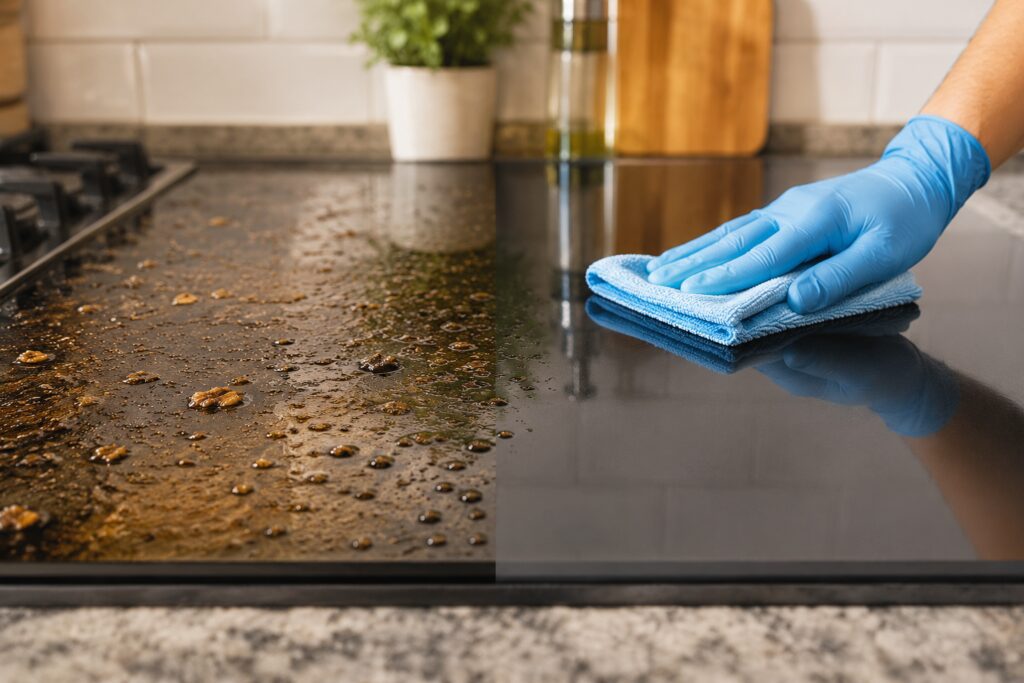
Think about a greasy stovetop. Plain water may move some debris, while a properly formulated detergent can help lift the oily residue itself.
Why pH Matters
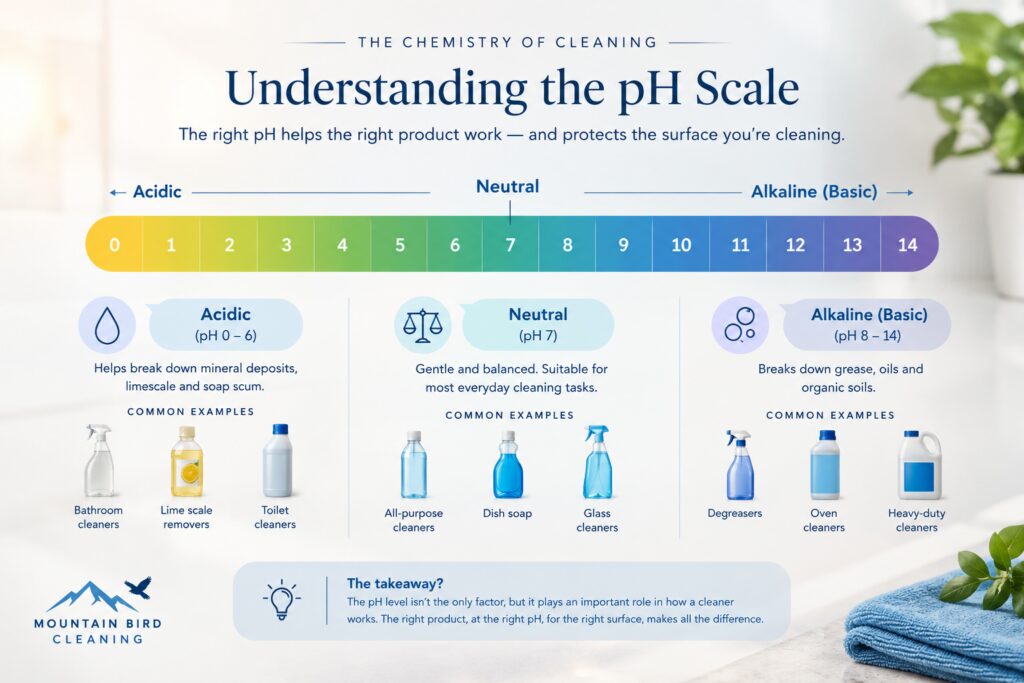
Another important part of cleaning chemistry is pH.
The pH scale runs from 0 to 14:
- Acidic: below 7
- Neutral: around 7
- Alkaline: above 7
Different cleaning challenges can respond to different chemistry. Alkaline formulations are often useful for greasy and oily soils, while appropriately formulated acidic cleaners can help with certain mineral deposits.
However, stronger isn’t automatically better.
Grease and Mineral Buildup Need Different Solutions
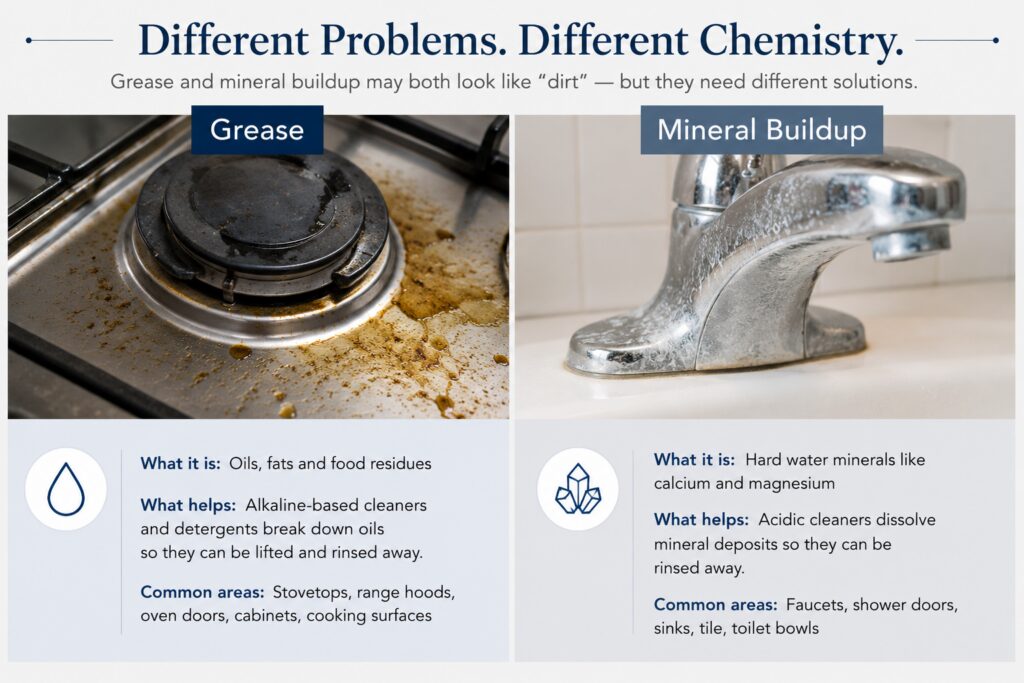
Imagine grease on a stovetop and white mineral buildup around a faucet.
Both may look like dirt, but they’re different cleaning problems.
A product designed to tackle oily kitchen residue may use different chemistry from one formulated to address mineral deposits. That’s one reason expecting a single cleaner to perform equally well on every type of buildup can lead to disappointing results.
The Surface Matters Too
Imagine grease on a stovetop and white mineral buildup around a faucet. Both may look like dirt, but they’re very different cleaning problems.
More importantly, you also need to consider the material underneath.
Natural stone, wood, stainless steel, tile, grout, glass, and other finishes can have different care requirements. For example, acidic products can damage or etch certain natural stones.
Before choosing a cleaner, ask:
What am I trying to remove?
What surface am I cleaning?
The right answer requires both.
More Product Doesn’t Mean More Cleaning Power
When a cleaner isn’t working quickly, it’s tempting to use more.
However, too much product can sometimes leave behind residue, film, or streaks. Concentrated products may also require specific dilution ratios.
Instead of assuming more is better, follow the manufacturer’s directions. The correct amount, application method, and rinsing process often matter more than adding extra product.
Sometimes You Need to Give It Time
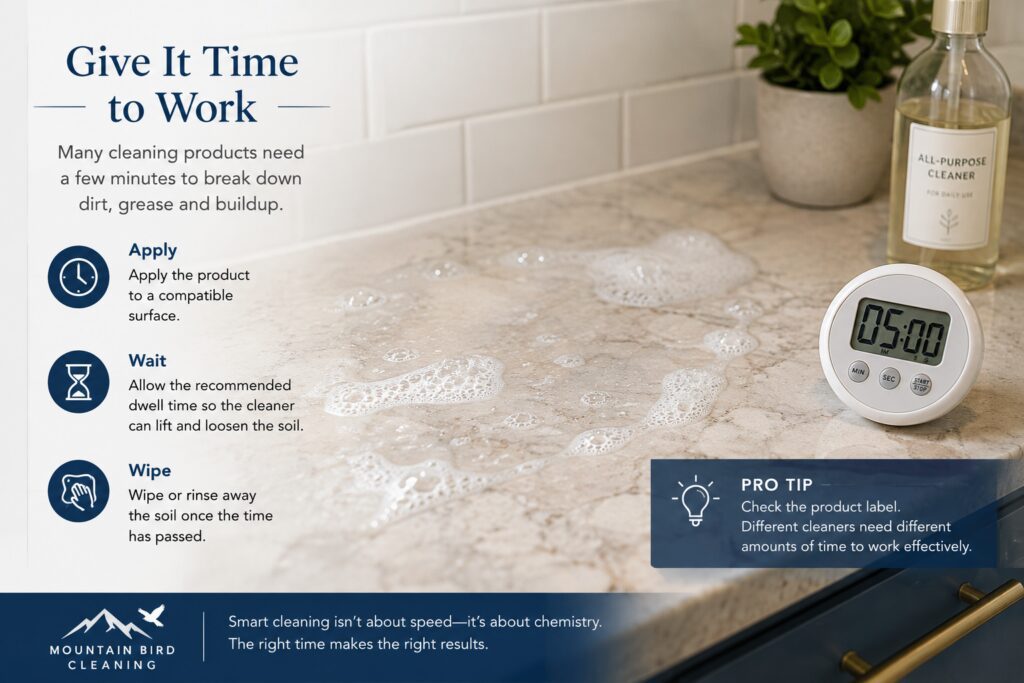
Some cleaners need time to interact with the soil before you wipe them away.
This is commonly called dwell time.
Immediately spraying and wiping may not give certain products enough time to loosen stubborn buildup. Always follow the product directions for the appropriate application and timing.
In other words, effective cleaning isn’t always about scrubbing faster. Sometimes the chemistry needs time to do its job.
Scrubbing Harder Isn’t Always the Answer
Cleaning also involves agitation, the physical action provided by a cloth, brush, mop, pad, or other tool.
But more force isn’t necessarily better.
An abrasive tool that works on one durable surface could scratch or dull another. That’s why good cleaning combines:
The right product + the right surface + the right technique + the right amount of time.
The Professional Approach
Professional cleaning isn’t simply about using stronger chemicals. It’s about understanding what the job requires.
Before tackling a surface, consider four things:
The soil: What needs to be removed?
The surface: What material are you working with?
The product: Is it appropriate for both?
The method: Does it require dilution, dwell time, rinsing, wiping, or agitation?
Once those pieces work together, cleaning becomes less about using force and more about using the right process.
Cleaning Isn’t One-Size-Fits-All
The chemistry of cleaning explains why one bottle isn’t necessarily the answer to every mess.
A product that cuts through kitchen grease may not be suitable for natural stone. A cleaner designed for mineral buildup may not belong on a delicate finish. And using twice as much product doesn’t necessarily make something twice as clean.
Good cleaning starts with understanding the surface, the soil, and the appropriate method.
At Mountain Bird Cleaning, we take a thoughtful approach to caring for different surfaces and spaces. Whether your home needs routine cleaning or specialized attention for floors, tile, grout, or other areas, choosing the right approach is part of achieving the right result.
Explore our professional cleaning services or contact Mountain Bird Cleaning to learn more.