Cleaning vs. Sanitizing vs. Disinfecting: What’s the Difference?
Cleaning vs. Sanitizing vs. Disinfecting: What’s the Difference?
Cleaning vs. Sanitizing vs. Disinfecting: What’s the Difference?
You wipe down the kitchen counter, spray the bathroom sink, and clean the doorknobs. But did you clean, sanitize, or disinfect them?
Although people often use these words interchangeably, they describe different processes. Understanding cleaning vs. sanitizing vs. disinfecting can help you choose the right approach for different areas of your home. As a result, you can avoid unnecessary product use and get better results from the products you already have.
The biggest misconception? A surface can look perfectly clean without necessarily being sanitized or disinfected.
Let’s break down what each term actually means.
Cleaning, Sanitizing and Disinfecting at a Glance
| Cleaning | Sanitizing | Disinfecting | |
|---|---|---|---|
| Main purpose | Removes dirt, impurities and many germs | Reduces germs to safer levels | Kills remaining germs targeted by the product |
| Typical method | Soap or detergent and water | An appropriate sanitizing product or method | EPA-registered disinfectant |
| Clean first? | This is the first step | Yes | Yes |
| Common household use | Routine household surfaces | Certain food-contact or mouth-contact surfaces | When someone is sick or additional germ control is needed |
The CDC explains the three processes in much the same way. Cleaning physically removes dirt and many germs. Sanitizing reduces germs to levels considered safe. Meanwhile, disinfecting kills remaining germs on surfaces.
What Does Cleaning Actually Do?
Cleaning is about removal.
Soap, detergent, water and physical action help lift dirt, grime, dust and many germs so you can wipe them away.
Think about a kitchen counter after preparing dinner. You may see crumbs, grease or a sticky spill. Cleaning deals with that visible mess while also physically removing many germs and impurities from the surface.
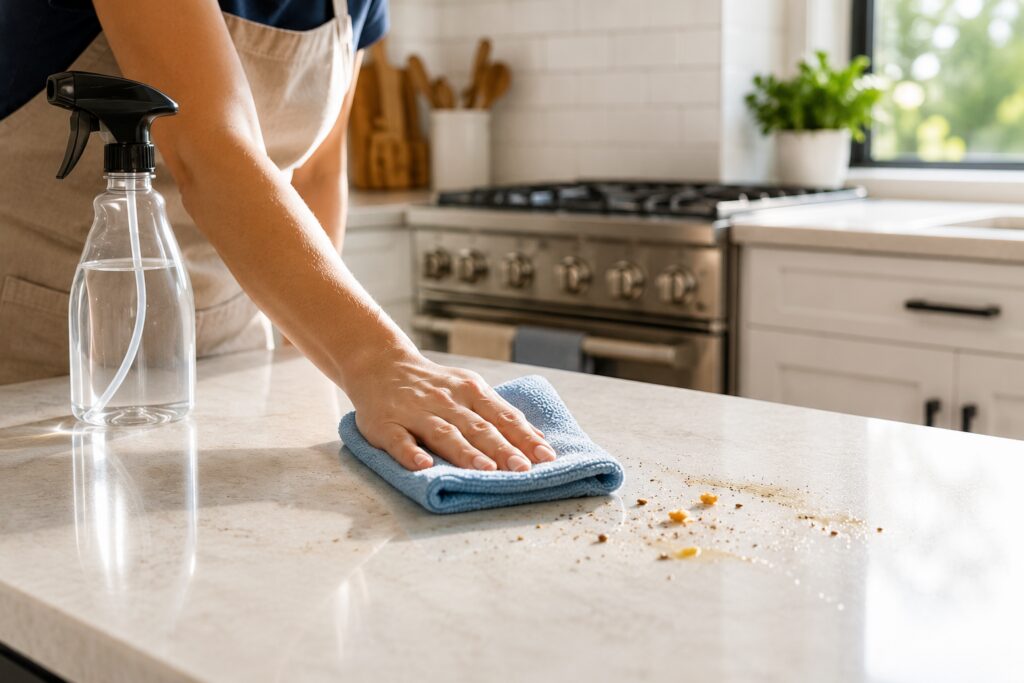
Routine cleaning is appropriate for many everyday situations around the home.
That can include:
- Removing grease from a stovetop
- Wiping dirt from a countertop
- Washing a sink
- Mopping floors
- Removing dust from furniture
- Cleaning fingerprints from frequently touched surfaces
Most importantly, you should generally clean first before you sanitize or disinfect.
So, What Is Sanitizing?
If cleaning removes dirt and many germs, sanitizing reduces the number of germs to a level considered safe.
The CDC specifically points to objects and surfaces that come into contact with mouths or food as situations where sanitizing may be appropriate, including certain toys, infant feeding supplies and food-contact surfaces.
However, sanitizing does not replace regular cleaning.
If crumbs or sticky residue cover a countertop, spraying sanitizer over it isn’t the ideal first step. Instead, clean the surface first and then sanitize it when appropriate.
That distinction is important because a surface being free of visible dirt and a surface being sanitized are not the same thing.
What Makes Disinfecting Different?
Disinfecting goes a step further.
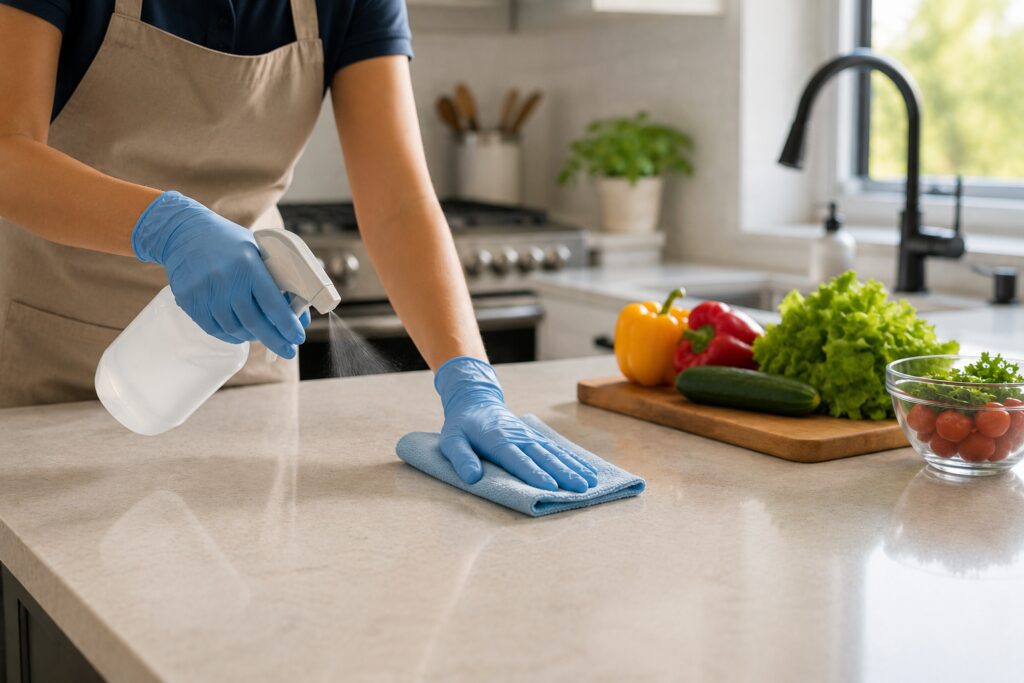
Rather than simply removing dirt or reducing germs, disinfecting uses a product that kills specific germs listed on its label.
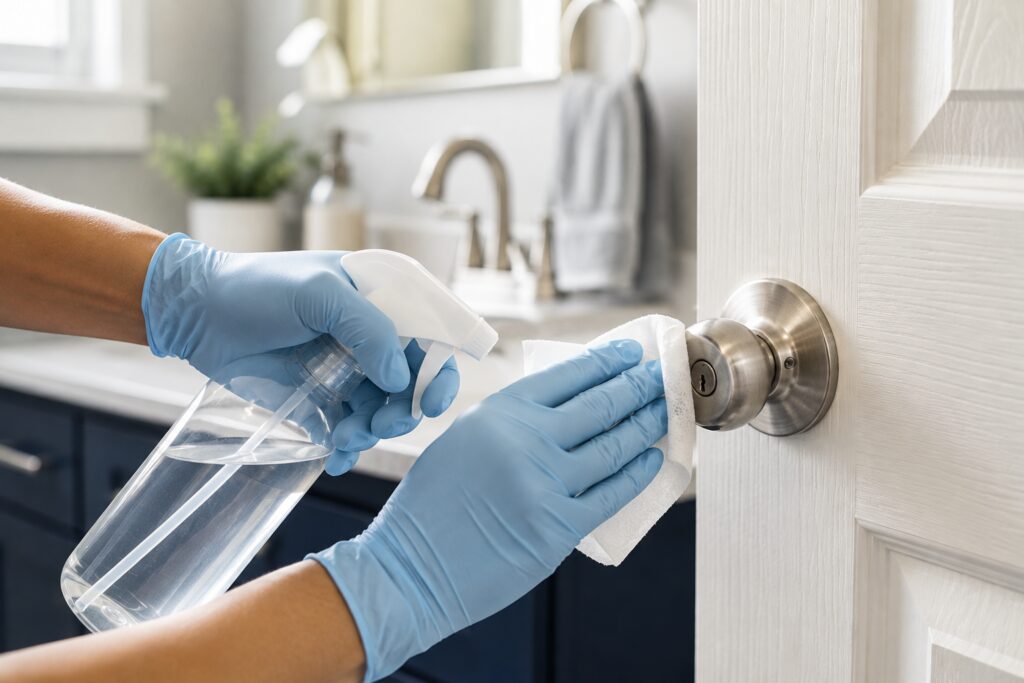
The CDC recommends cleaning before disinfecting. In addition, disinfection can be especially useful when someone in the home is sick or has a higher risk of illness.
In the United States, the Environmental Protection Agency (EPA) regulates disinfectant claims for surface products. Therefore, always follow the product label. It explains which surfaces you can treat and which germs the product targets.
That brings us to one of the most commonly overlooked parts of disinfecting.
The Step Many People Miss: Contact Time
Imagine spraying a disinfectant onto a bathroom counter and immediately wiping it dry.
It may feel like you’ve disinfected the surface. However, the product may not have had enough time to work properly.
Contact time, sometimes called dwell time, is how long a disinfectant needs to stay on a surface so it can work properly.
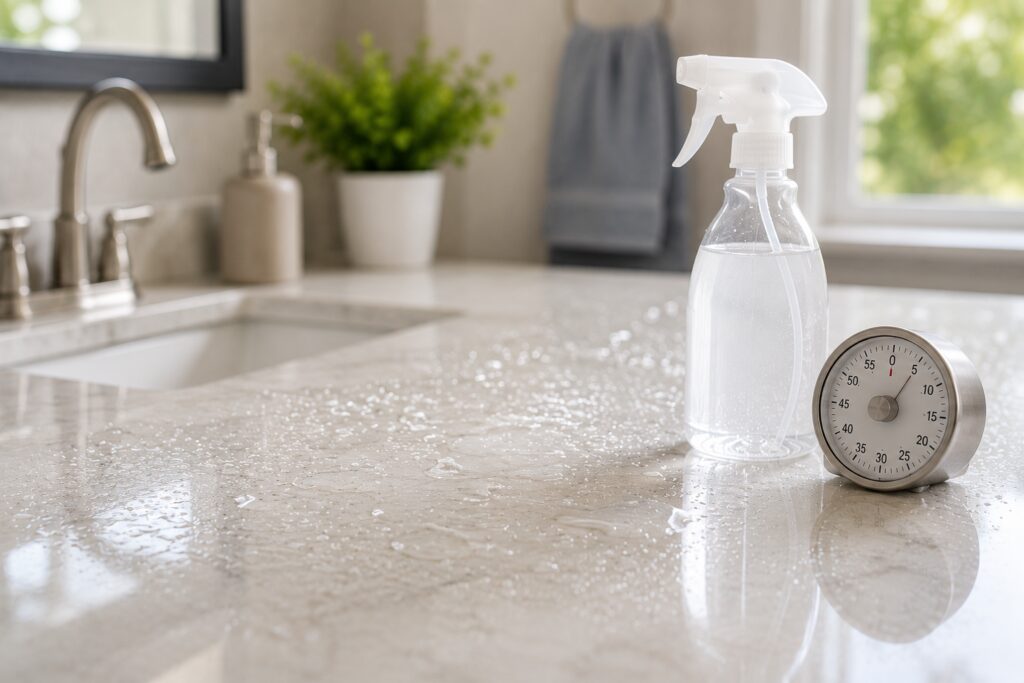
The EPA lists the required contact time in the product directions. For many products, you need to keep the surface visibly wet for that entire period. However, contact times vary by product and by the germs the product targets.
So instead of assuming that spray-and-wipe equals disinfected, read the label.
It tells you:
- Where the product can be used
- How it should be applied
- Whether dilution is required
- Which surfaces are appropriate
- Required contact time
- Important safety precautions
Therefore, following those instructions helps you use the product safely and effectively.
A Real-Life Example: The Kitchen Counter
Here’s an easy way to understand cleaning vs. sanitizing vs. disinfecting.
Imagine you’ve just finished preparing dinner.
Step 1: Cleaning
There are crumbs, grease and food residue on the counter.
You use an appropriate cleaner to remove the visible mess and grime.
That’s cleaning.
Step 2: Sanitizing
If you prepare food on the surface and sanitizing is appropriate, use a suitable sanitizing product and follow its instructions.
That’s sanitizing.
Step 3: Disinfecting
Now imagine someone in your household is sick and the counter is a frequently touched surface.
After cleaning, you might use an appropriate EPA-registered disinfectant. Again, follow the product label carefully.
That’s disinfecting.
Therefore, remember that these three words do not describe the same process.
Do You Need to Disinfect Everything?
Not necessarily.
More disinfectant does not automatically mean a cleaner home.
For routine household care, regular cleaning provides an important foundation. However, disinfection becomes more useful in certain situations, including when someone is sick.
Choosing the right process also helps you avoid using stronger products when a surface does not need them.
Before using any sanitizer or disinfectant, check whether the product suits the material you plan to treat.
Natural stone, finished wood, fabrics, electronics and other materials may have specific care requirements.
5 Common Mistakes to Avoid
1. Disinfecting a Dirty Surface
First, remove visible dirt and grime. This prepares the surface for the next step.
2. Wiping Disinfectant Away Immediately
The product may require you to keep the surface wet for a specific amount of time. Therefore, always check the label.
3. Assuming Every Product Does the Same Job
A cleaner, sanitizer and disinfectant may make different claims. Some products can perform more than one function. However, not every cleaning product sanitizes or disinfects. The EPA notes that some registered products carry both claims because manufacturers have tested them for both uses.
4. Using a Product on the Wrong Surface
Even an effective product may not suit every material in your home. Therefore, check the approved surfaces and use instructions on the label.
5. Thinking Stronger Means Better
Using more product than directed isn’t the goal. Correct application is.
Finally, never mix cleaning or disinfecting chemicals unless the product directions specifically tell you to do so. Some combinations can create dangerous gases or other hazards.
The Right Method Depends on the Situation
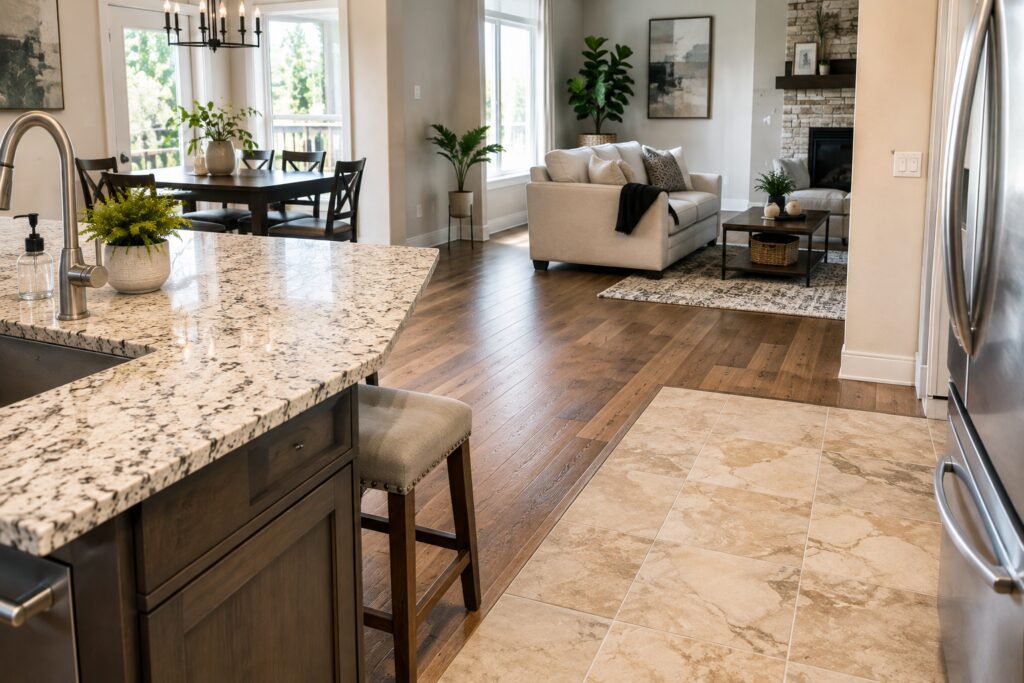
There isn’t one cleaning method that every surface needs every day.
A dusty bookshelf needs something different from a food-preparation surface. A muddy floor requires a different approach from a frequently touched bathroom surface when someone in the household is ill.muddy floor requires a different approach from a frequently touched bathroom surface when someone in the household is ill.
Once you understand the purpose of each process, you can choose the right method more easily:
Clean to remove dirt, grime and many germs.
Sanitize when reducing germs to safer levels is appropriate.
Disinfect when you need to kill specified germs and the situation calls for it.
Most importantly, follow the instructions for both the surface and the product you’re using.
Professional Cleaning Is About More Than Making Things Look Good
A professionally cleaned home shouldn’t simply look cleaner.
Different surfaces, materials and spaces need different techniques, products and levels of attention. Therefore, good home care starts with knowing when routine cleaning is enough and when you need a different approach.
At Mountain Bird Cleaning, our goal is to provide thoughtful, detailed cleaning while treating each space with the care it deserves.
You can explore our professional cleaning services or contact Mountain Bird Cleaning to learn more.